Guardians Of The Galaxy’s Grasp On Grief
5/27/2026
Greetings, everyone! Today we have a VERY special guest, the highly esteemed and critically acclaimed ASHLEY SCHOFIELD! You might know Ashley from that one cool VA-11 Hall-A book, but she has seriously done a lot of stuff worth your time. It's kind of criminal that I could book her!
Anyway, I'll let Ashley take over to tell you about Guardians of The Galaxy...
Think of everything you’ve got, for you will still be here tomorrow, but your dreams may not
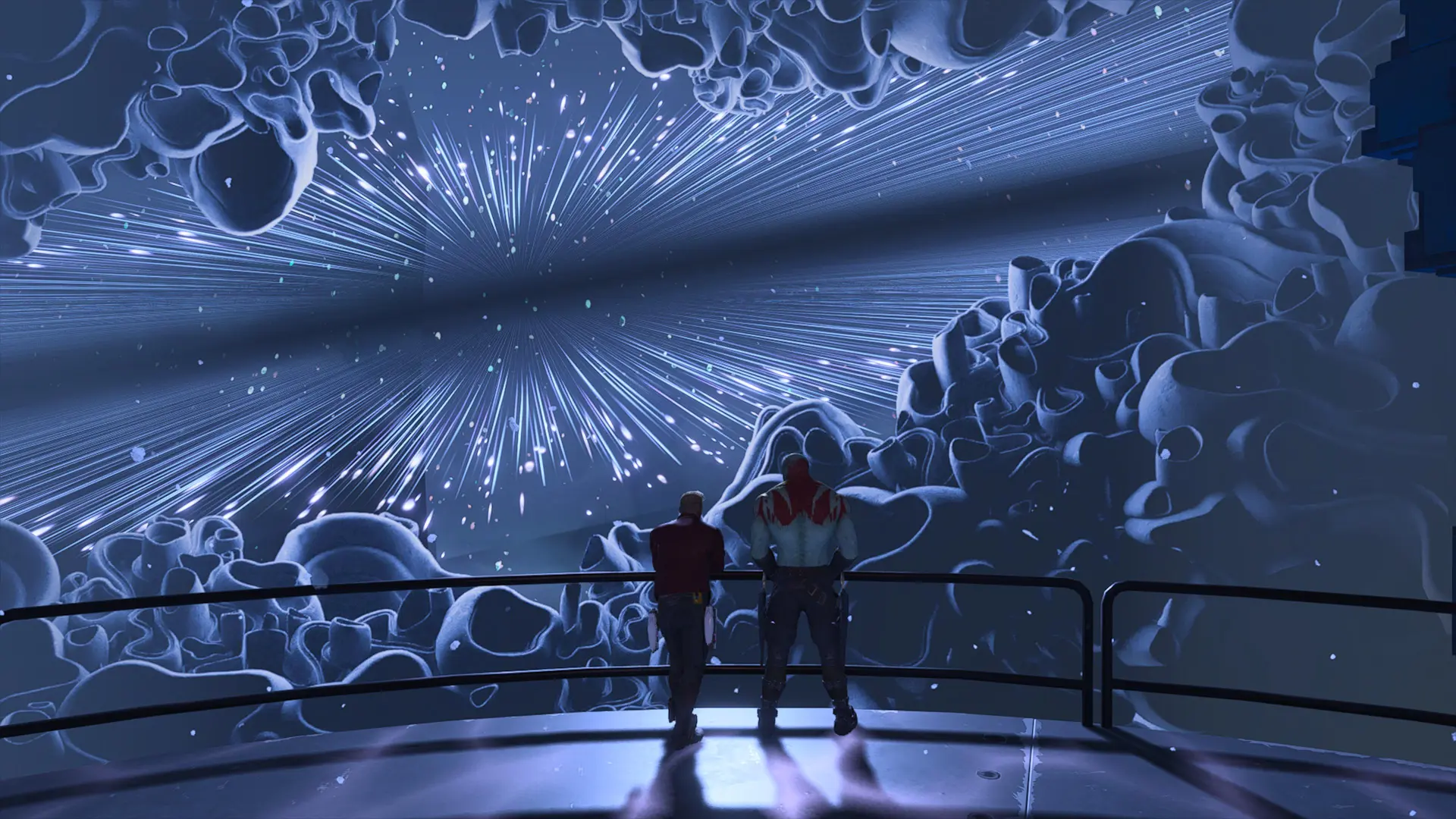
What if you could have all you’ve ever lost returned to you in a moment? Mothers, wives, sisters, daughters, limited to exist only in the fractured, fading memories of those who loved them when they still walked the earth. Brethren, loves, planets even, that were snatched away sooner than they deserved. All of them, all of your clouded recollections and misty visions of their grins, given back to you by God with just one simple, easy, warm choice.
So offers The Promise, the conversion tool utilised by Guardians Of The Galaxy’s Universal Church of Truth to tempt the broken and grieving into their ranks. And really, who wouldn't be tempted. There’s not a soul across these stars who hasn’t lost suffered grief that would be enough to shatter most. That weight is carried in unmoving lips, tensed muscles and white-hot bullet casings, never to be allowed to penetrate the soft, weak centre of their souls. The Promise holds no such reservations, piercing hearts without permission and forcing its stoic victims to not only relive their greatest loss, failure or sin, but also to see an idyllic, impossible vision of life without it. An intangible dream, one that cannot be grasped and saved for rainy days despite desperate hands reaching to hold onto it, but a convincing dream nevertheless.
So, I guess it makes sense that The Promise alone manages to make the entire galaxy kneel over the course of a few days, right? The ironclad and iron-fisted Nova Corps, the galaxy’s (corrupt, obviously) police force seem some of the first to fall. It’s not explicitly described what these soldiers’ personalised Promises look like, but one must presume they’re visions of fallen comrades, partners lost before a return from deployment could reunite the lovers. Helmets clouded by a purple mist, blind to reality as their hijacked brains endlessly replay this paradise, they abandon their (seemingly authoritarian) policing and devote themselves entirely to spreading the gospel — with their well-practiced brutality, if necessary.
Then there’s the residents of Knowhere - a scattered community of junkers, veterans, thieves, grifters all living within a literal corpse; united in very little other than the loss of something or someone, the loss that led them down this path. Cults do love to take in criminals, after all — bread, water, and a bed outside of a cell could make someone believe a lot of things if they’re luxuries they haven’t touched for years, even decades. Hell, the story is set not long after an intergalactic war started by Thanos claimed the lives of trillions, leaving an everpresent shadow of death in the people and places alike. Fertile ground for a mindkiller to wipe up the survivors.
This (literally) universal, top-down presentation of what The Promise is, and why it became such a fast-spreading epidemic, I hold no issue with. I can quite comfortably accept that a galactic population of war-torn survivors would struggle to prevent their minds being taken if it meant an escape from the dull ache and stabbing pains of grief. It starts to fall apart, though, when the illusion goes from being a vague concept to a series of scenes witnessed through Peter Quill’s eyes.
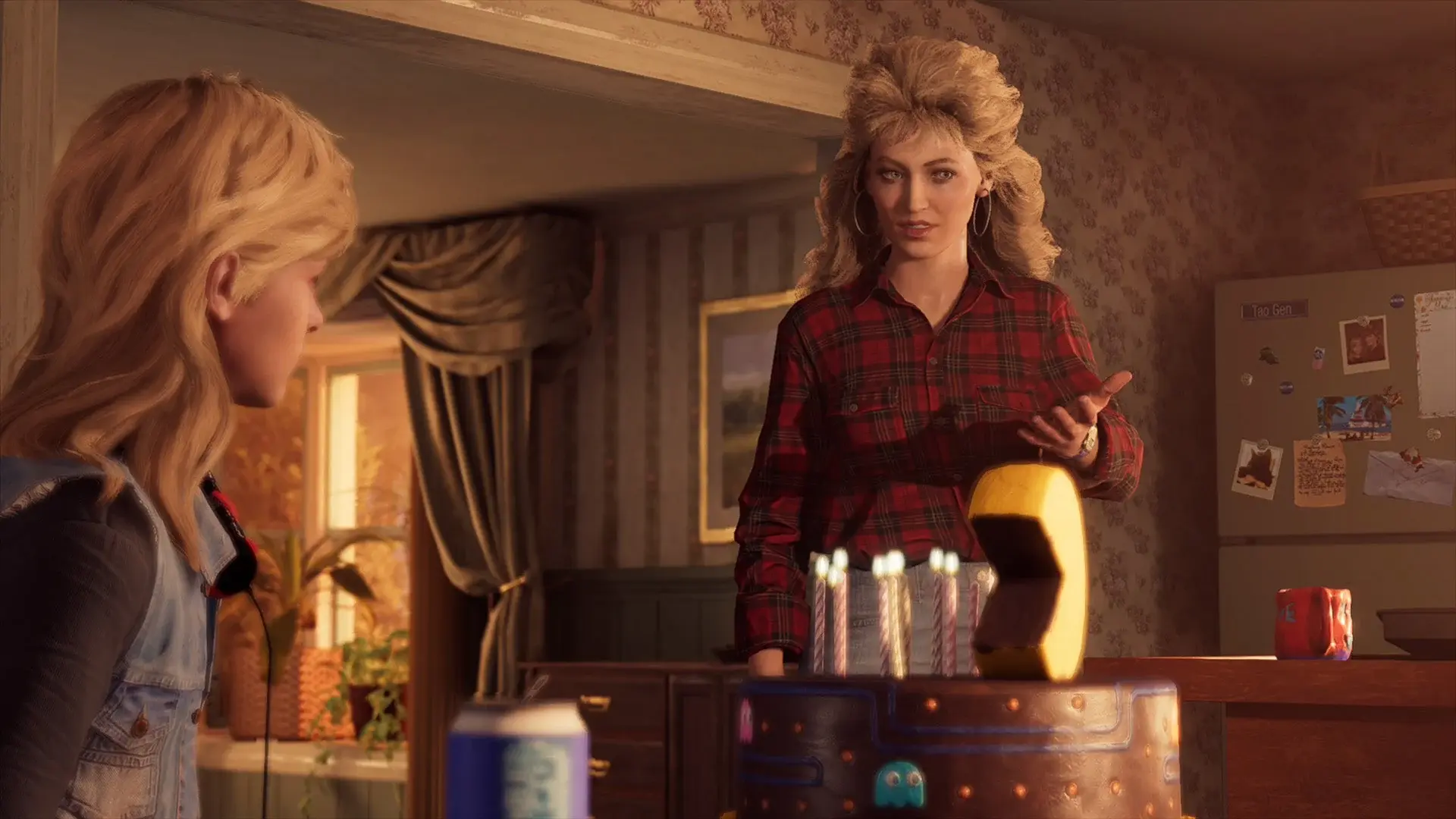
Quill’s own Promise exists within the harrowing memory of his mother’s death. On the eve of his teens, a professional-looking, somehow-homemade Pac-Man cake on the table and dreams of teenage independence (borrowing ten bucks to go to the movies) in his mind, the boy who would be Star-Lord is instead forced to watch Meredith bleed out at the hands of Thanos’ army before being abducted himself. This is, understandably, the single most traumatic event in Quill’s life. It’s an unbearable truth that his mother was taken from him far too soon, and that he would do anything to bring her back and just live a regular Terran life; he never had the chance to live out a childhood, and so he’s been stuck for most of his life as an exceptionally tall and dickish child.
The memory is first presented as a nightmare that Quill is implied to relive in slumber far more often than he would like, an inescapable echo of his past and what could have been, yet unchangeable in painful reality. The Promise, of course, offers a saccharine, perfect, power-fantasy alternative. Not only is Quill’s found family inexplicably present in their home, spacefaring assassins and not-raccoons conversing with Meredith about the weather in a last moments-esque memory soup, but the memory itself becomes interactable. Quill, through the power of love, friendship and Element Guns, is able to ward off the overwhelming Chitauri invasion with ease, saving Meredith’s life and changing his future. They can live here together forever: a happy family, blood and found. A warm purgatory.
For his part, Quill manages to see through this beautiful lie fairly quickly. Coming to the unfortunate but necessary realization that nothing, not even the Universal Church of Truth, can bring his mother back, he does what any responsible person would do faced with a vision of their ideal world: he takes aim and shoots his mother. A trembling finger fires one, two shots through Meredith’s abdomen — sidenote: throwing the prompts ‘Aim’ and ‘Shoot’ up on the screen while Quill stares down his own mother is fucking hilarious — as she falls to her knees and the illusion dissolves all around her. Quill resists the sweetness of the apple, accepts his mother’s death by killing her with his own two hands, and escapes the grip of The Promise.
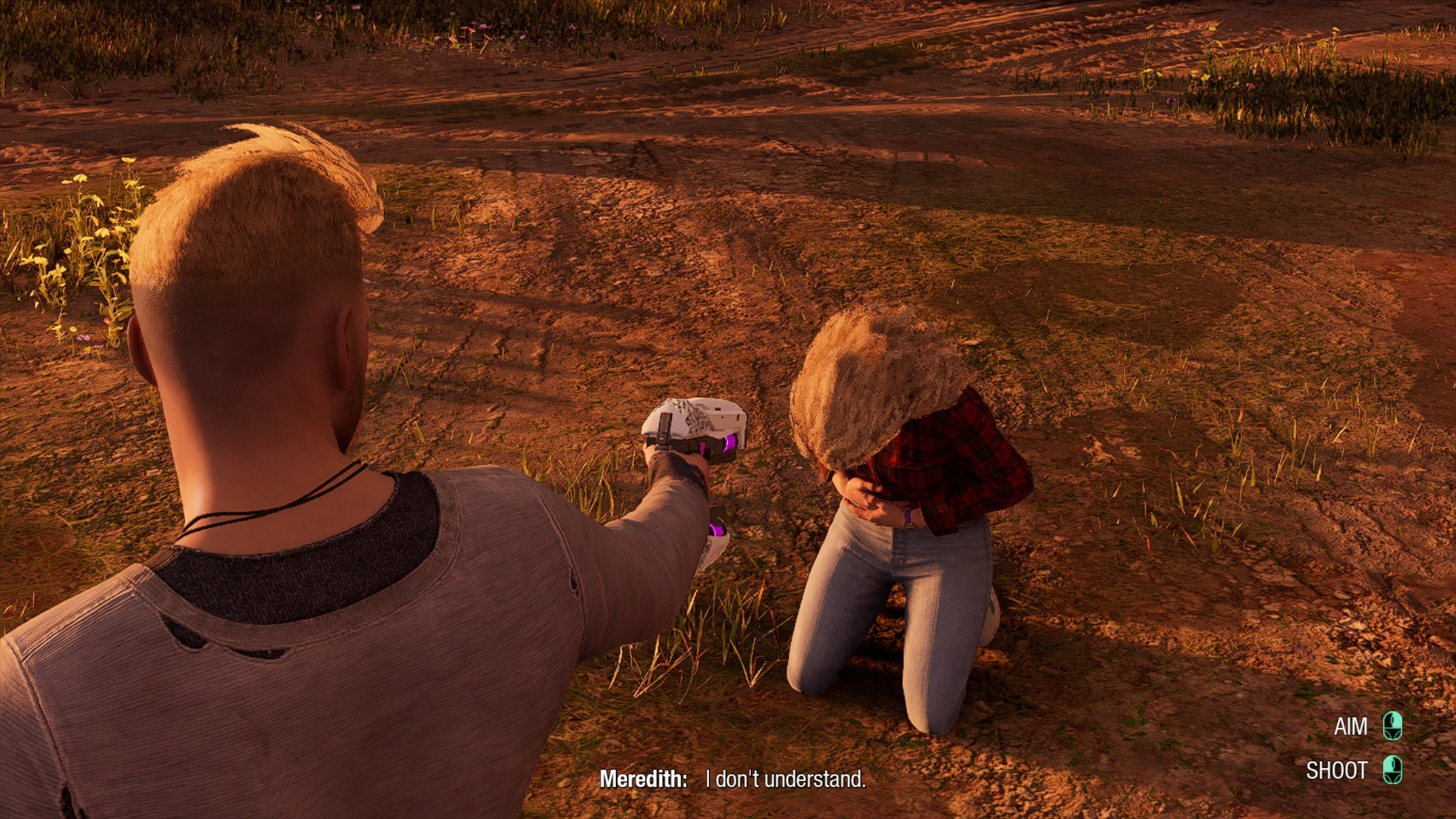
Then he unlocks an ultimate ability as a reward for processing his grief, like a lollipop given out on exit of a funeral.
This is so fucking stupid! The whiplash you just got from reading that sentence after the emotive description of that scene, of Quill’s agonising choice to do the right thing, is precisely the whiplash received on transitioning from that crushing story beat to a pop-up informing you that Star-Lord can now use the ‘Shield of Spartax’ Mega Ability to become invulnerable to gunfire for a short time. Discussing the game’s tone, narrative director Mary DeMarle said that “I like dealing with heavy emotions [...] I personally think some of the best things that I have seen are the stories where they get you laughing and then, boom, they suddenly undercut it. Or the reverse, where you’re like in this heavy scene and you're like ‘oh my god! I'm gonna start crying’ and then – bam – the comedy helps you let it out. The interplay of the two is very important.”
And goddamn, listen, DeMarle is right, it sure succeeds in undercutting the heavy scene. Turning acceptance of grief into a gameplay mechanic doesn’t entwine narrative and play as I assume Eidos Montreal hoped for, it just reminds me of the shackles of interactivity that this narrative is constrained by.
This doesn’t only apply to Quill, though — on their journey of learning to work as a team rather than a band of misfits, each Guardian gets their own moment of acceptance. Grief is the theme, as I’ve been so dutifully reminded by people who insist this game has a fantastic and touching story. The other primary example of this is Drax’s Promise, as unlike Quill, the Destroyer falls to the temptation of it without much resistance. For a man with such incredible physical and mental fortitude, it’s odd that an obvious fabrication would sweep him up with such ease, yet his eyes turn purple all the same. Drax’s grief lies not in a mother, but a wife and daughter, taken from him by Thanos.
Following his successful quest murdering Thanos in bloodlusted revenge, he had to learn the hard way that lives cannot be traded. The women he loved, and still loves, are gone. He speaks incredibly highly of them in party chats and aboard the Milano, never missing an opportunity to remind the Guardians of his unending love for them beyond the grave. There’s even an entirely missable, incredibly touching conversation between Drax and Quill on Knowhere in which the two reflect on the deaths of the women they loved, with Quill seemingly trying to convince both himself and Drax that they’re in a better place. He’s understood — been forced to understand — that grief is love persevering. Yet, despite all of this being laid out prior to his conversion, he takes the Promise at face value and wholeheartedly believes that it will somehow bring his wife and daughter back. As if they’d died yesterday.
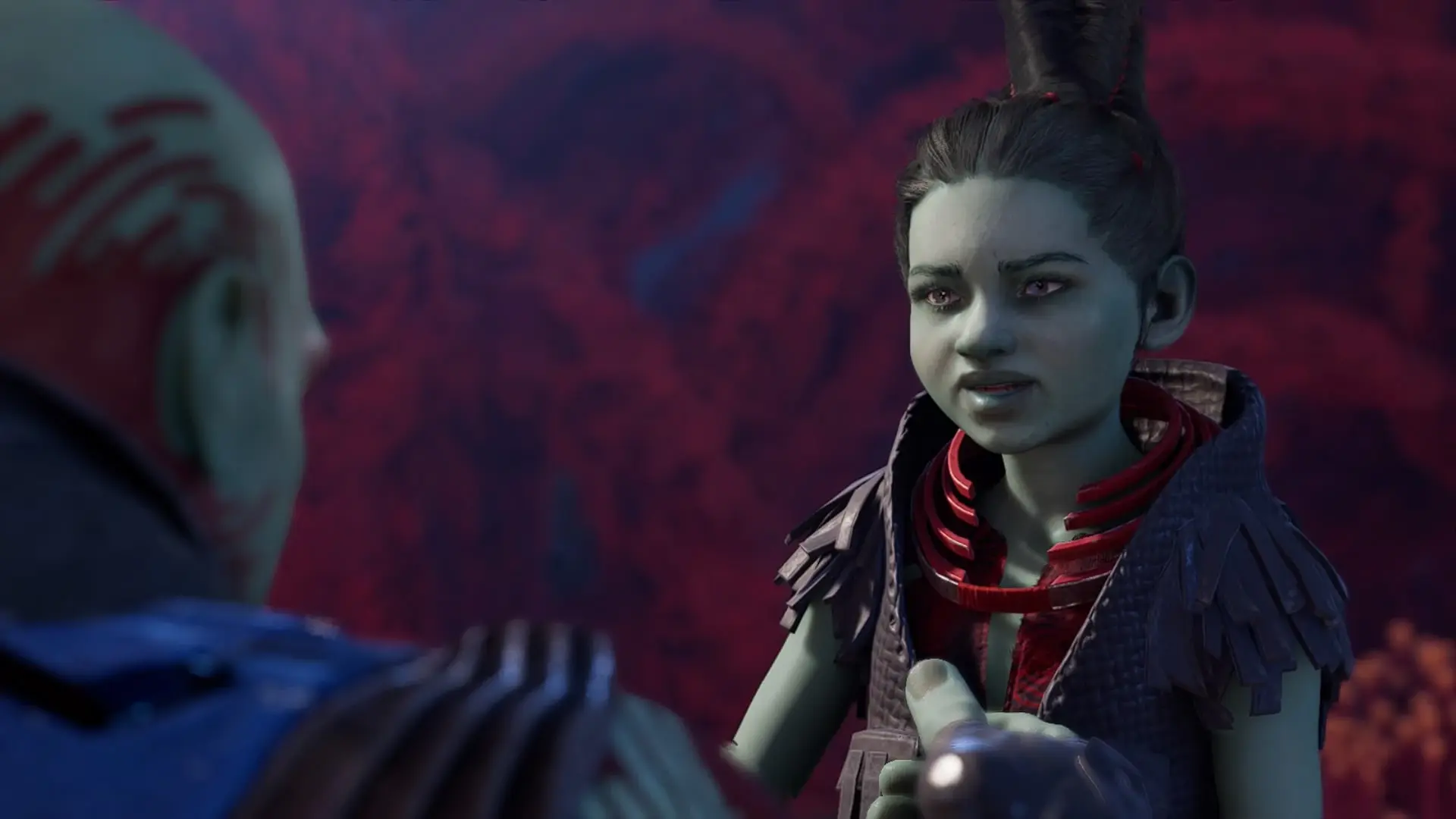
The Guardians’ romp through his mind, witnessing crystallised memories of the happy family interacting and listening to Adam Warlock (who is also in this episode) spouting alliterative answers and performative platitudes, culminates in a fight against the Mad Titan: the object of Drax’s rage and revenge placed directly in front of the Guardians to defeat in his stead. Thanos laughs, beckoning forth these weaklings. Gamora takes well-deserved joy in the thought of killing her own father. Quill quips about this being ‘better than therapy’. Groot says his name a bunch. Thanos falls, much faster than you’d expect from the man who killed trillions. And splits in two. Then four. Then eight. Then, quickly, with a thousand blaster shots and a few team abilities, the horde of Thanos’ (Thani?) overwhelms Quill in a forced loss, and all meaning this moment could have had dissipates alongside their phantom forms. What could have been the single most important moment for both Drax and Gamora, Drax sharing the lesson from his own past that killing Thanos will do nothing to help her, even with her own fucked up paternal relationship, is a one-minute boss fight for spectacle. The true Drax is finally found within his superego, struggling to approach the illusions of his wife and daughter. He takes their hands, stating “I will cherish the time that we had, and not resent the time that we had.” They fall into his arms, soft and tangible for the last time, before his blades pierce their abdomens. He lets them go the only way the Destroyer knows: with violence. “I shall love and honor you both. Always.”
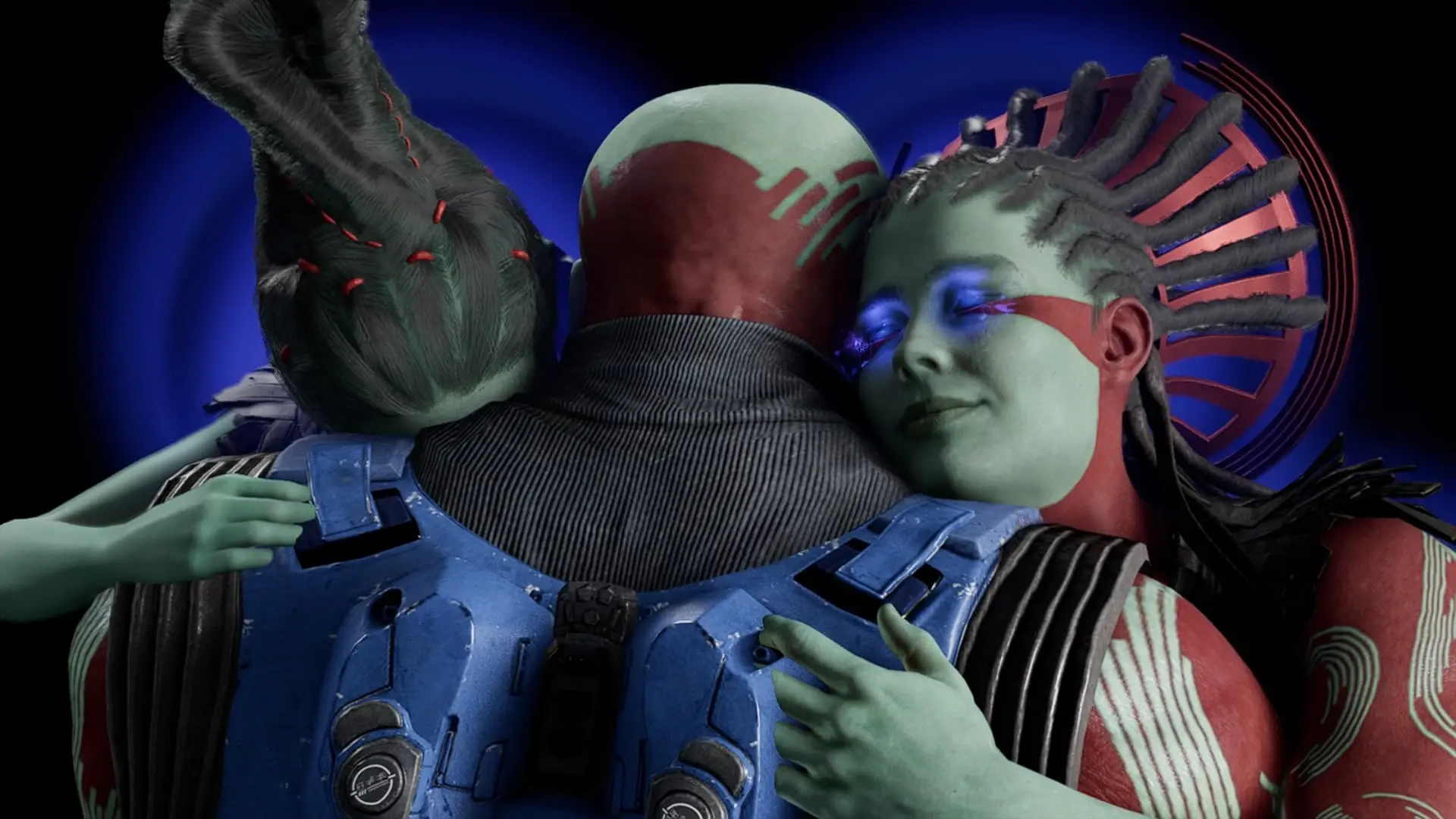
As with Quill, Drax’s acceptance leads to the unlocking of the stupid fucking ultimate ability ‘Wrath of Katath’, as ‘rejecting his promise and fully accepting his family’s deaths showed Drax how truly strong he is’ — a line that made me laugh out loud when I read it. This game is so desperate for me to take its theme of grief and acceptance seriously, and then keeps pulling this shit. With Quill, it makes sense for him to struggle to accept the death of his mother. The man is a child, his development frozen from the moment he watched Meredith take her last breath. Pulling the trigger on her forces him to finally move forward and process her death, accepting not just the unreality of the Promise’s illusion, but also the awful truth of her passing in reality. The boy becomes a man — and learns how to make himself temporarily invulnerable, I guess. This narrative structure doesn’t work with Drax. He’s faced so much loss and processed so much grief, including specifically the deaths of his wife and daughter, prior to this point. He watched Thanos die by his own blade only to realise in horror that it had changed nothing. He speaks well of his dead, but that’s just the thing: he knows they’re his dead. There’s no way to include his Promise as it stands without regressing his character and outright ignoring the man that’s been built up within, and before, the entire narrative up until this point. It’s hollow.
In case you’re wondering, the same thing happens when Gamora speaks up and sheds a tear upon vocalising her shame around killing her sister Nebula earlier in life. Rocket’s moment of acceptance is trudging through a waterfall, forced to face his fear of water instilled by the waterboarding he suffered when being experimented on. Groot’s is…not shown, actually. He just kinda gets his Mega Ability later, for reasons I can only presume were that the writers couldn’t think of a way to communicate Groot experiencing loss and acceptance. If it seems like I’m rushing through the other Guardians, it’s because that’s exactly what the game does! Quill and Drax are the special boys who have their grief explored, but because the Mega Abilities are tied to this narrative structure and the other Guardians can’t just go without an ultimate ability, the depth of their grief is limited to that of the puddles Rocket is so terrified to walk through.
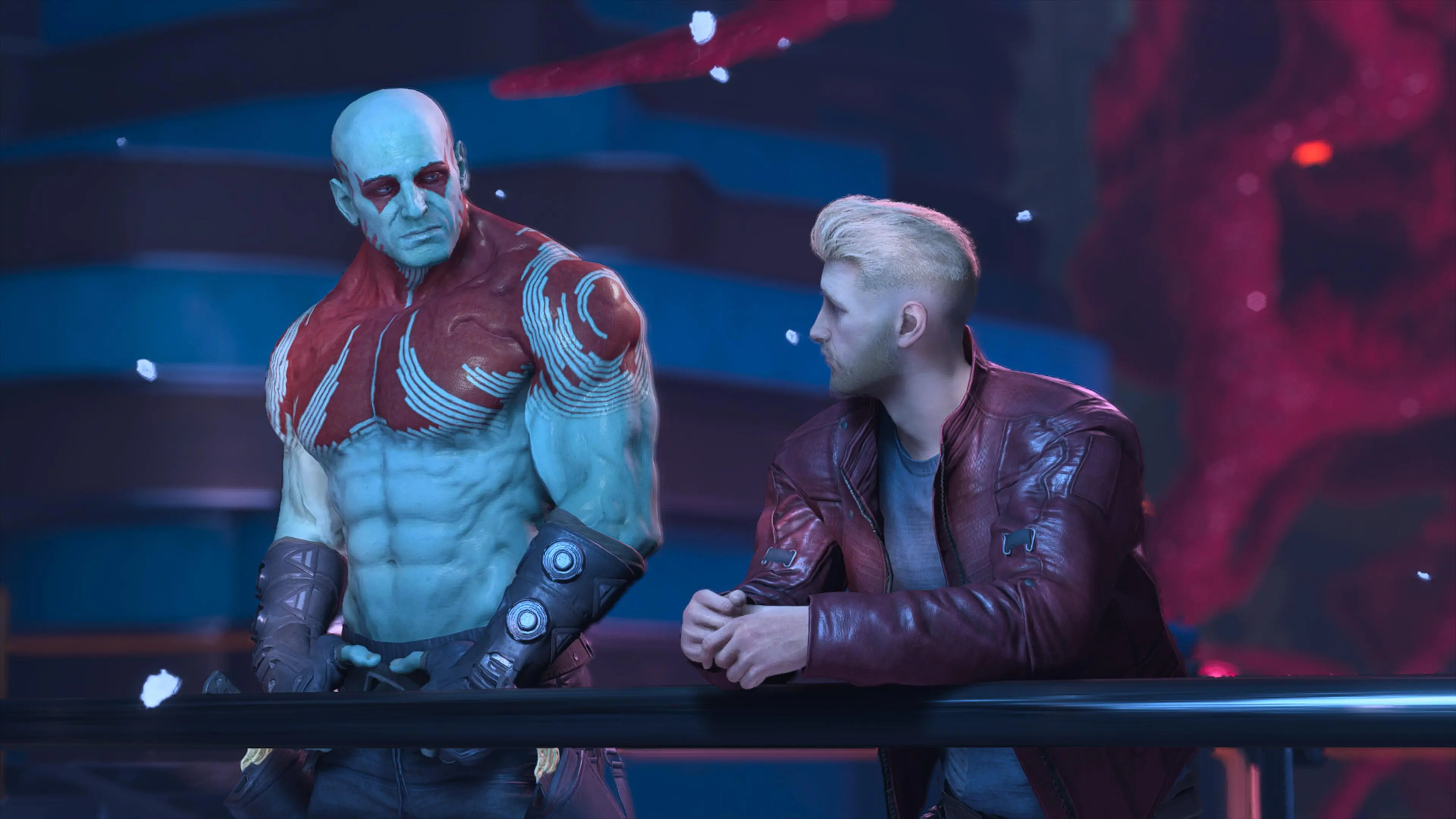
I bought this game on the oft-repeated pretense that it was one of the few ‘good’ superhero stories in video games, an underrated gem that didn’t get the attention or sales it deserved. I had just experienced the troughs of such stories with Spider-Man 2 (which you can read all about starting here), and was desperate to taste something sweeter, something with a touch more body to it. Sadly, Guardians Of The Galaxy actually ended up recalling a fair few of the spider sequel’s very flaws: attempting to centre a story around grief without taking the time and effort to build up and earn forced emotional beats that end up ringing empty; forgetting that there are more characters in the story than just two special boys and frontloading all the emotional weight into those two, and introducing gameplay mechanics that prioritise buttons feeling good to press over narrative cohesion and impact. It’s not ludonarrative dissonance if there’s no harmony to contrast in the first place. I hate to say it, but Guardians’ handling of grief disappointed me — the only loss I felt was that of the money from my purse.
Run fast for your mother, run fast for your father
Run for your children, for your sisters and brothers
Leave all your love and your longing behind
You can’t carry it with you if you want to survive
- Ashley